






 Settings
 Fast Delivery
 Payment Types


 Marketplace Product


Increasing battery longevity is universally important because it raises the return on investment while improving data integrity. The challenge is to identify the right battery based on various factors.
Choosing the right battery can save money now and for decades.
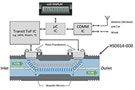 How to Use Ultrasonic Sensing in Smart Water Meters
Publish Date: 2022-12-06
How to Use Ultrasonic Sensing in Smart Water Meters
Publish Date: 2022-12-06
A description of the operation and integration of ultrasonic flow sensors in smart water meters and a brief review of standards for residential meter accuracy.
Requirements for pulse and continuous discharge rates, energy density, and operating temperature range are some of the keys to realizing long battery life.
Energy harvesting, rechargeable and non-rechargeable batteries, and supercapacitors – singly or in combination – can power remote applications for decades.
All batteries are not created equal. However, differentiating superior quality cells can be difficult, as short-term test often fail to duplicate actual long-term performance.
Understanding battery self-discharge.
Battery chemistries each have special qualities that can make certain cells impractical for varying kinds of internet-of- things applications.
The rapid expansion of the Industrial Internet of Things (IIoT) has impacted every sector of industrial automation.
A lithium metal oxide (LMO) battery is a specialized form of primary (non-rechargeable) cell developed for use in certain medical, military and industrial applications that require a self-contained power source that is small and lightweight.
Consumer electronic devices are generally powered by either alkaline batteries, consumer grade lithium primary (non-rechargeable) batteries, or consumer grade Lithium-ion (Li-ion) rechargeable batteries.
High energy lithium metal oxide (LMO) batteries enable handheld surgical devices to be small and ergonomic, allowing surgeons to operate quickly and efficiently to reduce fatigue.
Self-powered electronic devices that define the Industrial Internet of Things (IIoT) have special needs that can be addressed through the judicious selection of battery chemistry.
An example of how to use capacitors to improve the ability of lithium thionyl chloride batteries for long term service of wireless sensor nodes.
IoT wireless device designers focus on the growing need for transient performance and low power modes in DC/DC converters.
Tadiran's technical news article titled "18 years old PulsesPlus™ batteries show very high capacity proving an unmatched, real life storage performance of Tadiran’s lithium PulsesPlus™ battery technology".
Tadiran Batteries' technical news article titled "Large Scale Investigation of Tadiran HLC (Hybrid Layer Capacitor) Storage Performance over 5 years".
As Internet of Things (IoT) devices become increasingly popular, designers strive to find a low power, battery--free energy solution to power these devices.
Discover how a primary battery can be used to supplement an energy harvesting, energy storage subsystem to create a longer power lifetime for an IoT product.
A look at rechargeable lithium batteries becoming more viable for use in critical military applications as power densities increased and price points reduced.









 United States