Settings
 Fast Delivery
DigiKey customers in the United States can select from a range of delivery options, including Ground shipping at $6.99 and 2-Day at $12.99
 Payment Types
Credit account for qualified institutions and businesses
Payment in Advance by Wire Transfer


 Marketplace Product
More Products From Fully Authorized Partners
Average Time to Ship 1-3 Days. Please see product page, cart, and checkout for actual ship speed.
Extra Ship Charges May Apply
For more information visit Help & Support


In this tutorial, we look at the history of Rust, its advantages and disadvantages, and show how to create a basic "Hello, World!" application.

Generics and traits are two of Rust's most powerful features for writing flexible, reusable code without sacrificing type safety or performance. We’ll examine both generics and traits in this tutorial.

In this tutorial, we'll explore how to communicate with external digital devices using Inter-Integrated Circuit (I2C), one of the most popular communication protocols in embedded systems.

In this tutorial, we'll explore how to configure and handle timer interrupts on the Raspberry Pi Pico 2, creating a blinking LED program where the processor spends most of its time sleeping while hardware interrupts handle all the timing.

In this tutorial, we'll explore how to apply TDD principles to embedded Rust by writing unit tests for our TMP102 driver library.

In this tutorial, we’ll discuss the concept of lifetimes and demonstrate a few ways in which you can help the compiler (and borrow checker) understand your intentions with references by using lifetime annotations.

In this tutorial, we'll expand our blinking LED project to add USB serial communication, enabling us to send debug messages from our Raspberry Pi Pico 2 to a computer.

In this tutorial, we'll learn how to create a reusable library (crate) in Rust by extracting our TMP102 sensor code into a separate package that can be shared across multiple projects.
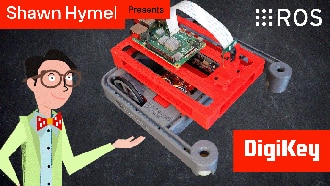
In this post, we’ll introduce ROS. We’ll focus specifically on ROS 2, which is the current and actively developed version of the framework. Whether you're new to robotics or looking to understand the tools powering today’s most advanced robots, this is the place to start.
Co-Browse
By using the Co-Browse feature, you are agreeing to allow a support representative from DigiKey to view your browser remotely. When the Co-Browse window opens, give the session ID that is located in the toolbar to the representative.
DigiKey respects your right to privacy. For more information please see our Privacy Notice and Cookie Notice.
Yes, Continue to Co-Browse
Need Help?

Get fast and accurate answers from DigiKey's Technicians and Experienced Engineers on our TechForum.
Please visit the Help & Support area of our website to find information regarding ordering, shipping, delivery and more.
Registered users can track orders from their account dropdown, or click here. *Order Status may take 12 hours to update after initial order is placed.
Users can begin the returns process by starting with our Returns Page.
Quotes can be created by registered users in myLists.
Visit the Registration Page and enter the required information. You will receive an email confirmation when your registration is complete.
Fast Delivery
DigiKey customers in the United States can select from a range of delivery options, including Ground shipping at $6.99 and 2-Day at $12.99
Payment Types
Credit account for qualified institutions and businesses
Payment in Advance by Wire Transfer
Marketplace Product
More Products From Fully Authorized Partners
Average Time to Ship 1-3 Days. Please see product page, cart, and checkout for actual ship speed.
Extra Ship Charges May Apply
For more information visit Help & Support
Thank you!
Keep an eye on your inbox for news and updates from DigiKey!
Please enter an email address
Please accept the checkbox




 United States
Copyright © 1995-2026, DigiKey.
All Rights Reserved.
Terms & Conditions
Privacy Notice
Accessibility Statement
Cookie Settings
United States
Copyright © 1995-2026, DigiKey.
All Rights Reserved.
Terms & Conditions
Privacy Notice
Accessibility Statement
Cookie Settings