Wire Ferrules
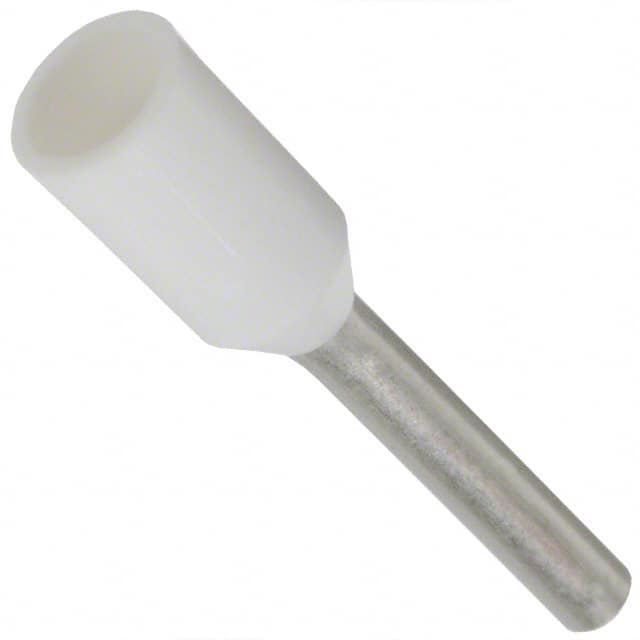
Wire Ferrules are often over looked but vital parts for any practical power delivery system, as they allow a clean, solid and reliable connection to be made between the conducting wire and receptacle. In the high action world of FIRST Robotics competition having a wire become disconnected or loose could be disastrous at a critical moment. Parts like the wire ferrule 288-1008-ND can prevent that by making sure that a wire never has a chance to break out with rock solid mechanical and electrical connections
When looking at Wire Ferrules there are two key attributes that you look at. The first is the wire gauge of the wire you will be using the ferrule on. The second is insulation as ferrules are available with or without insulation. Once you have filtered based on these two options most of the ferrules will work for your application.
Connectors
Not all connections in the FIRST Robot require heavy-duty connectors, especially when they need to connect a wire to a circuit board, sensor or other piece of equipment. That is where smaller, lower profile parts come into play, like the connector housing WM2901-ND and related connector contacts WM2510-ND. These connectors work with smaller gauge wire and need to be crimped onto the end of a prepare wire but allow for quick and easy installation and disconnection between the wire and equipment allowing teams to keep experimenting and refining their creation over the build sessions.
Finding the right connector starts with understanding if you have a connector that you are trying to mate with or if you are starting a new application. If you have an existing connector you can often find the mates listed on the bottom of the page for that connector or in the datasheet. If you are looking for a new application, you will need to know how many positions (number of wires) that you are needing. Other important features to finding a good connector are understanding pitch and row spacing if your connector has more than one row. Once you have selected a housing (connector with no metal contacts in it) you can often find contacts listed as associated parts on the page or by looking in the data sheet. Many connectors can use a variety of contacts based on wire gauge or contact material.
Mounting Hardware
DigiKey inventory is not just electronic components and accessories, we also have hardware solutions for the most demanding applications any FIRST Robotics team could find themselves in. That is why parts like 36-4337-ND can be found in nearly every teams toolbox. As a lightweight but strong flange, this mounting bracket can be placed nearly anywhere to carry the load. And with a wide selection of screws, bolts and nuts there is even more to choose from for your needs.
Mounting hardware is key to any project that you want to add on sensors, lights, boards and more. Key attributes to understand when looking for a mount are shape of the mount and the hole size or threading of the hole. Hole size is often determined by the screws, bolts and nuts that you plan to use with your mounting hardware.
Wire Labels
Not everyone can look at a plate of spaghetti noodles and tell where each one leads off to, why should a pile of wires be any different. Clear and accurate labeling of wires inside the robot is an important task during the construction phase of any FIRST Robot. That is why parts like 298-10676-ND are vital to every team. Each wire can be labeled and traced as its crosses the inner workings of the robot frame and prevent any hazardous short circuits before they happen.
The key attributes to wire labels are if you a specific printer you are using with the labels (for use with). Some labels do not require a specific printer or can be hand written for prototyping projects, so the key attribute becomes label type such as the common flag label or if you want something that is heat shrinkable. Once you know your type you can sort through the available sizes to find labels that fit your needs.
Zip Ties and Zip Tie Mounts
Making sure nothing comes loose or gets in the way is one of the Zip Ties most important jobs, can’t have a durable robot with every wire and cable flopping about. The one – two punches of 1436-1801-ND Zip Tie and 277-12086-ND Zip Tie Mounts are able to tie down and secure anything in or on the FIRST Robotic frame and construction.
When looking at Zip Ties the first key attribute is the width of zip tie. This is often associated with the strength of the tie. Next is the length of the zip tie to ensure that the tie will go around the item you are trying to secure to the mount.
When you are looking for a mount to use with the zip tie there are two key attributes. The first comes from the width of the zip tie you will be using. When sorting parts, you will see this listed under for use with and a measurement of up to so large. The second is how you want to secure the mount. This can range from adhesive that is included on the mount, push or snap in, or some that will require hardware such as a screw to mount.
When you are looking for a mount to use with the zip tie there are two key attributes. The first comes from the width of the zip tie you will be using. When sorting parts, you will see this listed under for use with and a measurement of up to so large. The second is how you want to secure the mount. This can range from adhesive that is included on the mount, push or snap in, or some that will require hardware such as a screw to mount.
Terminals
Making sure that wires are securely terminated where they need to go to each component are the most important aspects of terminals. The construction and operation of FIRST Robots are a little bit more rough and tumble then most other applications, makes this doubly so. Parts like 94741-01-ND and 94836-01-ND are ideal for this since with their thick and durable construction make them stand up to the demands of any application and easy enough to work for anyone.
When looking at terminal spade connectors (or quick connectors) there are a couple key attributes that you want to know to help filter down to the parts you need for your project. The first is if you are looking for a free-hanging (crimp on wire) or if you are looking for a soldering (Printed Circuit Board or Stud Mount). If you are looking for a crimp option, you will also need to know the wire size you are working with to make sure it will work with the terminal. The other item that is often over looked is the width of the spade. 0.187” (3/16 of an inch) and 0.250” (1/4 of an inch) are the most common widths and you will want to make sure both your male and female terminals are the same width.
When you are looking for a ring terminals the key attributes that you need to know are the wire gauge that you will be using with the ring terminal as well as the stud size that the ring will need to go over. If you need help understanding stud size vs terminal diameter here is a post showing how to measure.
3d Printer Filament
As 3D printing becomes cheaper and more common, more and more teams find it simpler and easier to print the parts and shapes they need for their robots. Here at DigiKey we can offer a wide selection of 3D Printing filaments and accessories for any teams need. With a color range as wide as a rainbow, diameters for any printer and material specifications for any application, we are sure to have something to offer for any team. Please check out our selection of in stock and ready to ship 3D printing filaments here 3D Printing Filaments and be sure to check out DigiKey’s selection of 3D Printers and 3D Printing Accessories to give your 3D printer set up that something special extra.
3D printer filament will require you know the specifications of the printer that you will be using. The first attribute you will need to know is the acceptable filament diameter that will work in your print head. The second key attribute is the melting point and material type, some 3D Printers can only reach a certain temperature and will only accept certain types of material for the 3D printer filaments. Once you know what material and size you can choose the color(s) you would like to use, along with any special features, such as ESD safety or wear resistance for high movement parts that your application requires.
Passive Resistors
Every circuit can’t be made up of voltage sources and other active components, you need passive components as well and in this case the CF14JT1K00CT-ND resistor is an ideal choice for FIRST teams with small size, flame retardant coating and high temperature ratings make this part the perfect choice for the heat of competition.
On a base level the two key attributes that you need to know for resistors are of course resistance value, typically measured in ohms, and power rating, measured in watts, for the circuit you need to add the resistor to. The other key you will need to know if how you are going add resistance into your circuit and if the resistor needs to be through hole or chassis mount. Not sure which option you will need during fabrication? One of these resistor kits are handy to have around provided you know what levels of power you will be working with.
Rotary Encoder
Knowing how fast an object is rotating or what angle is relative to reference point are vital pieces of information for navigation and positioning of any robot, especially a FIRST robot in competition. The GH3070-ND is a tough, long lasting rotary encoder that is able to output 256 Pulses per Revolution making it easy to track position and movement of any item connected to the input shaft.
Rotary Encoders are devices that can convert mechanical motion into an electrical output signal and are one way to bridge the gap between the physical and electrical world. There are a few things to decided when selecting an encoder.
Consider how the encoder would be mounted on robot frame, some need to mount on a circuit board and others will need to have a chassis mount hole drilled and secured with washer and nut. So be sure to choose one that will work with your structural set up.
Output Signal Type is how the part will communicate with the rest of the circuit. Some encoders have different output codes and circuits and microcontrollers will need to accept that information. So be careful when switching between two different types of encoder outputs as there may be a problem.
Number of pulses per revolution is how many times the encoder will output a signal based on one turn of the input shaft. Usually, the higher the number the more actuate the position measurement will be, but there will be a higher data rate to go along with it.
Jumper Wires and Pre-Crimped Wires
If your team is still experimenting and designing the robot’s layout, consider Jumper Wires or Pre-Crimped wires as a valuable time saver. Without the time and tooling required to crimp contacts and wires together, a FIRST team can rapidly change wiring and connections on the fly to make sure that the robot is competition ready.
With DigiKey’s value add department we are able to pre-crimp any number of wires and contacts for your application. So, if you don’t find exactly what you are looking for feel free to reach out at any time and see what we are capable of.
Pre-crimped wires have lots of uses and knowing the application will be key in finding the right leads. The first is the contacts that you need on your wires. There are options with ring terminals, quick connects, and pins and sockets.
Once you have filtered the options for your appropriate connector you can select you desired wire gauge and length to see which options are available. If you don’t see the option you need, our value add department might be able to make it for you.
Electrical Multimeter
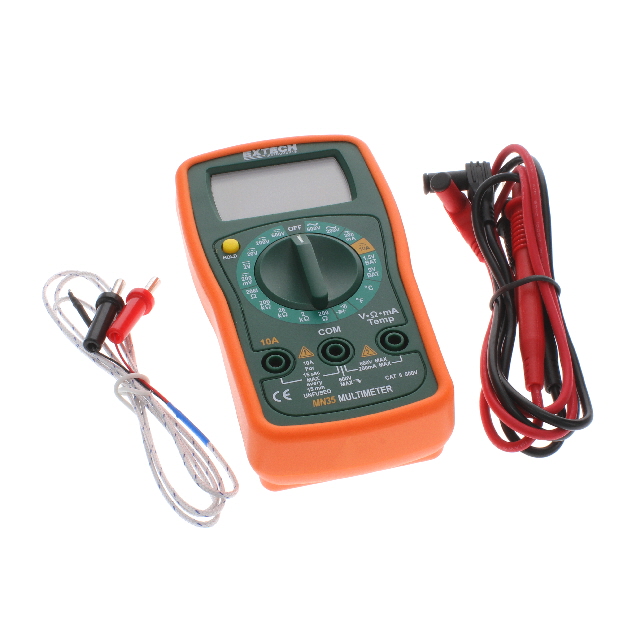
An electrical multimeter is a vital tool to any FIRST robot team or electrical engineer. With a wide range of features to probe, test and measure nearly any electrical values such as voltage between two points, current passing through a wire, or even temperature over time, around the robot frame, you can ensure that there is always going to be some way to know about the health of the on board electrical systems. The MN35-ND is a great basic multimeter packed with features to cover any situation a FIRST team may find themselves in while still being light and compact enough to get into the tight spaces inside the robot frame.
Electrical Multimeters have many different types and not all are suitable for easy use during projects.
The best starting point is selecting which style type will be easiest to work with, if you need to move around and test many different places, a handheld or probe style might be best. Next would be to select a unit that is able to take the types of measurements you will be making; most will measure voltage resistance and current values, but others also include the ability to measure temperature, frequency of a signal and capacitance values. Selecting the Functions or Features required would be a recommended step as some meters are able to also function as dataloggers if recording values over time is needed, or test which way a diode is facing.







 Configuración
 Entrega rápida
 Tipos de pago


 Producto del mercado












 Estados Unidos